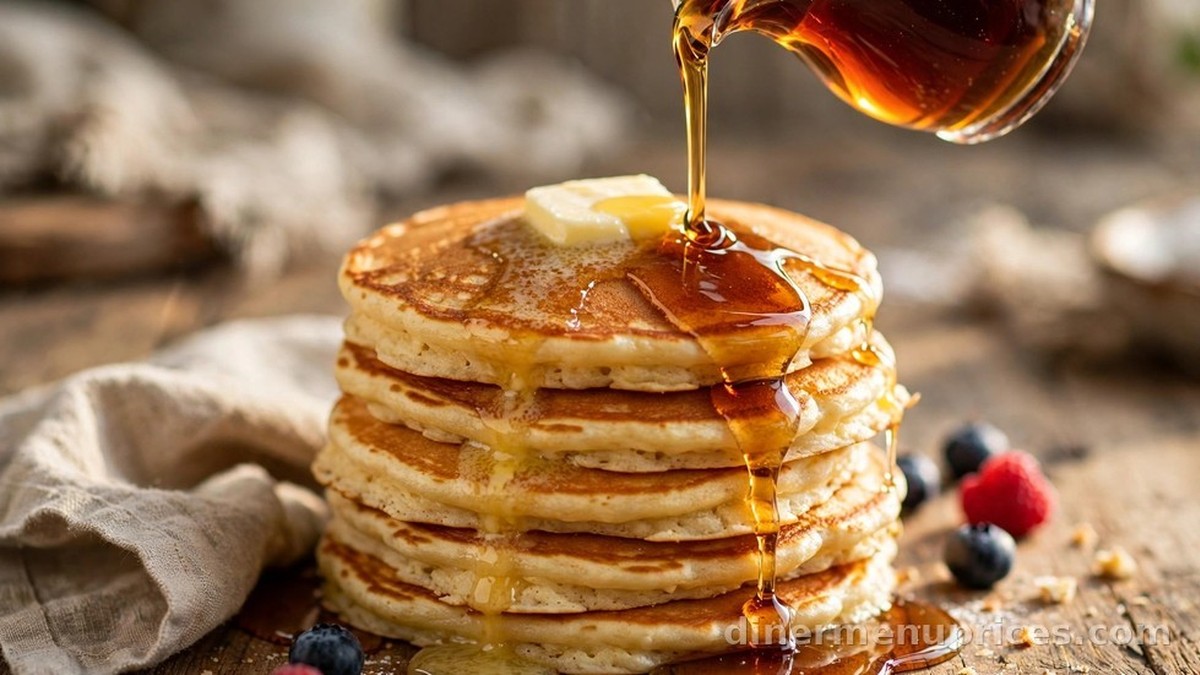
Copycat IHOP buttermilk pancakes recipe
Key Takeaways
– This homemade copycat IHOP buttermilk pancakes recipe recreates the fluffy, golden, buttermilk-tang style of classic American diner pancakes — no restaurant trip required.
– Real buttermilk plus a double hit of leavening (baking powder and baking soda) is the secret behind the signature lift and tender, airy crumb.
– The whole recipe takes about 30 minutes from first whisk to first bite, and makes 8 large pancakes — enough for 4 generous servings.
– Cooking a stack at home typically costs a small fraction of restaurant prices (see the cost comparison below).
– Three simple rules guarantee success: keep the batter lumpy, use a medium-hot griddle, and flip each pancake exactly once.
What Makes Diner-Style Buttermilk Pancakes Special
There is a reason a tall stack of buttermilk pancakes is the undisputed king of the American diner breakfast menu. The style made famous by pancake-house chains like IHOP is all about contrast: a deeply golden, lightly crisped exterior giving way to a cloud-soft interior with a gentle buttermilk tang. That tang is the whole point — real buttermilk brings acidity that reacts with the leavening agents, creating the tall, airy rise you can practically see happening on the griddle.
What follows is not the restaurant’s proprietary formula (that is a closely guarded trade secret). It is an original homemade recipe developed to capture the same spirit: fluffy, golden, buttery pancakes with that unmistakable diner character. Everything you need is probably already in your pantry, and the technique is forgiving enough for a first-time cook. By the time you flip your last pancake, you will understand exactly why this style of pancake earned its cult following.
Ingredients You’ll Need
This recipe keeps things simple and pantry-friendly. The ingredient list mirrors the classic buttermilk pancake fundamentals — flour, sugar, eggs, leavening, buttermilk, and a little melted butter — proportioned for maximum fluff and a tender bite. A touch of vanilla rounds out the flavor, echoing the warm, buttery notes of a restaurant-style stack.
| Ingredient | Amount | Notes |
|---|---|---|
| All-purpose flour | 1 1/4 cups | Spoon and level for accuracy; do not pack |
| Granulated sugar | 2 tablespoons | Just enough for gentle sweetness and browning |
| Baking powder | 1 1/2 teaspoons | Check the date — fresh leavening matters |
| Baking soda | 1/2 teaspoon | Reacts with the buttermilk for extra lift |
| Fine salt | 1/2 teaspoon | Balances sweetness and sharpens flavor |
| Large egg | 1 | Room temperature blends more smoothly |
| Buttermilk | 1 1/4 cups | Well shaken; the star of the show |
| Unsalted butter, melted | 2 tablespoons | Plus more for the griddle |
| Vanilla extract | 1 teaspoon | Optional, but adds a warm diner-style aroma |
No buttermilk in the fridge? You can make a quick stand-in by stirring 1 tablespoon of white vinegar or lemon juice into 1 1/4 cups of regular milk and letting it sit for 5 to 10 minutes until slightly thickened. It will not be identical to cultured buttermilk, but the acidity still activates the baking soda and delivers a convincingly tangy, fluffy pancake.
Step-by-Step Instructions
Step 1 — Whisk the dry ingredients. In a large mixing bowl, whisk together the flour, sugar, baking powder, baking soda, and salt until evenly combined and no small clumps of leavening remain. Taking thirty seconds here means the pancakes will rise evenly later, with no bitter pockets of baking soda.
Step 2 — Mix the wet ingredients. In a separate bowl or large measuring cup, whisk the egg until the yolk and white are fully broken up. Add the buttermilk, melted (and slightly cooled) butter, and vanilla extract, then whisk until smooth. Cooling the butter first is a small detail that matters — hot butter can scramble the egg on contact.
Step 3 — Combine, but don’t overmix. Pour the wet mixture into the dry ingredients and stir gently with a spatula or wooden spoon until just combined. Stop while the batter is still lumpy. Those lumps are your friends: they disappear during cooking, and under-mixing is the single biggest difference between tender pancakes and tough, rubbery ones.
Step 4 — Rest the batter. Let the batter sit undisturbed for 5 to 10 minutes. During the rest, the flour hydrates and the batter thickens noticeably, which translates directly into taller, fluffier pancakes on the griddle. Use this time to heat your pan and warm the syrup.
Step 5 — Heat the griddle. Set a nonstick skillet or griddle over medium heat and let it warm up for a couple of minutes. Add a thin layer of butter or neutral oil and wipe out the excess with a paper towel — you want a whisper of fat, not a puddle. Test the heat by flicking a drop of water onto the surface; it should sizzle and dance before evaporating.
Step 6 — Cook the pancakes. Scoop about 1/4 cup of batter per pancake onto the hot griddle, leaving space for spreading. Cook for 2 to 3 minutes, until bubbles appear across the surface and the edges look set and slightly dry. Flip once with a confident flick of the spatula and cook 1 to 2 minutes more, until the second side is golden brown.
Step 7 — Serve warm. Transfer finished pancakes to a warm plate and tent loosely with foil while you cook the rest. Stack them high, crown the top with a pat of butter, and pour over warm maple syrup. Add berries, whipped cream, or your favorite toppings and serve immediately.
Tips for Extra-Fluffy Pancakes
– Embrace the lumps. Stirring just until the flour disappears — no more — keeps gluten development low and the crumb tender. A perfectly smooth batter is actually a warning sign of overmixing.
– Rest the batter. That 5-to-10-minute rest lets the flour fully hydrate and gives the leavening a head start, so the pancakes puff up the moment they hit the heat.
– Use fresh leavening. Baking powder and baking soda lose strength over time. If your tin has been open for more than six months, test the baking powder by dropping a pinch into hot water — it should fizz vigorously.
– Keep the heat at medium. Too hot and the outsides scorch before the centers cook through; too cool and the pancakes turn pale and dense. Medium heat with a minute or two of preheating is the sweet spot.
– Flip only once. Every extra flip presses out the air bubbles you worked to create. Wait for the bubbles, flip once, and leave it alone.
– Don’t press the pancakes. Pressing with the spatula feels productive but squeezes out steam and flattens the crumb. Let the griddle do the work.
– Warm the syrup. A quick 15 to 20 seconds in the microwave keeps warm pancakes warm and makes the whole stack taste more indulgent.
– Hold batches in a low oven. For a crowd, keep finished pancakes on a sheet pan in a 200°F (95°C) oven. They stay warm and fluffy for up to 20 minutes without drying out.
Fun Variations to Try
Once you have the base recipe down, it becomes a launchpad. The batter accepts mix-ins beautifully, and each variation below keeps the same fluffy, golden character while adding its own personality.
| Variation | How to Make It | Why It Works |
|---|---|---|
| Blueberry burst | Fold 3/4 cup fresh or frozen blueberries into the rested batter | Juicy berries pop against the tangy buttermilk crumb |
| Chocolate chip | Sprinkle 1/2 cup chocolate chips over each pancake right after pouring the batter | Melty chips in a fluffy stack — a diner classic |
| Banana nut | Fold in 1 sliced banana and 1/3 cup chopped toasted walnuts | Sweet banana and crunchy nuts echo classic diner toppings |
| Cinnamon swirl | Swirl 2 tablespoons cinnamon sugar into each pancake on the griddle with a toothpick | Warm spice makes the whole kitchen smell like a pancake house |
| Lemon bright | Add 1 teaspoon lemon zest to the wet ingredients and serve with berries | Citrus lifts the buttermilk tang for a fresher-tasting stack |
A quick note on frozen fruit: add it straight from the freezer without thawing, and expect the pancakes to need an extra 30 seconds per side. The batter chills slightly on contact, so the griddle needs a touch more time to set the centers.
Estimate Your Diner Order
Estimates based on typical US diner menu ranges. Actual prices and nutrition vary by location.
Homemade vs. Restaurant: Cost Comparison
One of the best arguments for the copycat approach is simple math. A restaurant short stack comes with atmosphere and zero dishes, but the markup on pancakes — a dish built from some of the cheapest ingredients in the kitchen — is enormous. The table below compares the approximate cost of making this recipe at home against typical restaurant menu prices for a comparable stack.
| What You’re Paying For | Homemade (per serving, ~2 pancakes) | Restaurant (per short stack, estimated) |
|---|---|---|
| Pancakes (ingredients only) | $0.75 – $1.25 | $5.99 – $9.99 |
| Butter + syrup | $0.50 – $1.00 | Included |
| Coffee or drink | $0.25 – $0.50 | $2.50 – $4.00 |
| Tax + tip | $0.00 | $2.00 – $4.00 |
| Total per person | $1.50 – $2.75 | $10.50 – $18.00 |
Restaurant prices vary significantly by location, city, and whether you are ordering from a national chain or an independent diner, so treat the right-hand column as a realistic range rather than a quote. Even at the most generous homemade estimate, cooking the stack yourself costs roughly one-fifth of eating out — and you get to control the ingredients, the portion size, and how much syrup goes on top.
Storage and Reheating
Leftover pancakes store remarkably well, which makes this recipe a strong candidate for weekend meal prep. Cool the pancakes completely, then refrigerate them in an airtight container or zip-top bag with small squares of parchment between the layers. They keep for up to 4 days in the refrigerator.
For longer storage, freeze the cooled pancakes in a single layer on a sheet pan for an hour, then transfer them to a freezer bag with the air pressed out. They will keep for up to 2 months. Reheat straight from frozen — no thawing needed.
The toaster is the best reheating tool for one or two pancakes: it crisps the edges while warming the centers, closely recreating the fresh-off-the-griddle texture. For a larger batch, arrange pancakes on a sheet pan, cover with foil, and warm in a 350°F (175°C) oven for about 10 minutes. The microwave works in a pinch (20 to 30 seconds per pancake), but the texture softens more than with the other methods.
Frequently Asked Questions
Can I make these pancakes without buttermilk?
Yes. The quickest substitute is 1 tablespoon of white vinegar or lemon juice stirred into 1 1/4 cups of regular milk, rested for 5 to 10 minutes until slightly thickened. Plain yogurt thinned with a splash of milk also works. The pancakes will still be fluffy, though the signature tang will be milder than with real cultured buttermilk.
Why are my pancakes flat instead of fluffy?
The most common culprits are overmixed batter, expired leavening, or skipping the rest. Stir only until the flour disappears, check that your baking powder fizzes in hot water, and give the batter its 5-to-10-minute rest. A griddle that is too cool can also cause spreading instead of rising.
Can I make the batter ahead of time?
It is best mixed fresh, because the baking powder starts reacting as soon as it meets liquid. If you want a head start, whisk the dry ingredients the night before and store them covered at room temperature, then add the wet ingredients in the morning. Fully mixed batter can rest in the fridge for up to a few hours, but the pancakes will be slightly less lofty.
How do I keep pancakes warm when cooking for a crowd?
Heat your oven to 200°F (95°C) and place finished pancakes in a single layer on a sheet pan inside. They will stay warm and fluffy for up to 20 minutes. Avoid stacking them high while holding — trapped steam softens the crisped exteriors.
Is this the actual IHOP recipe?
No. This is an original homemade recipe inspired by the fluffy, golden style of diner buttermilk pancakes. We are an independent site with no affiliation with IHOP, and the chain’s proprietary recipe has never been published. What you get here is our own tested take on the style, built from classic buttermilk pancake fundamentals.
*Disclaimer: DinerMenuPrices.com is an independent editorial site and is not affiliated with, endorsed by, or sponsored by IHOP or any restaurant chain. This article presents an original homemade recipe inspired by the diner-style buttermilk pancake — it is not the chain’s proprietary recipe. Menu prices shown are estimates based on typical ranges and vary by location.*
One Comment